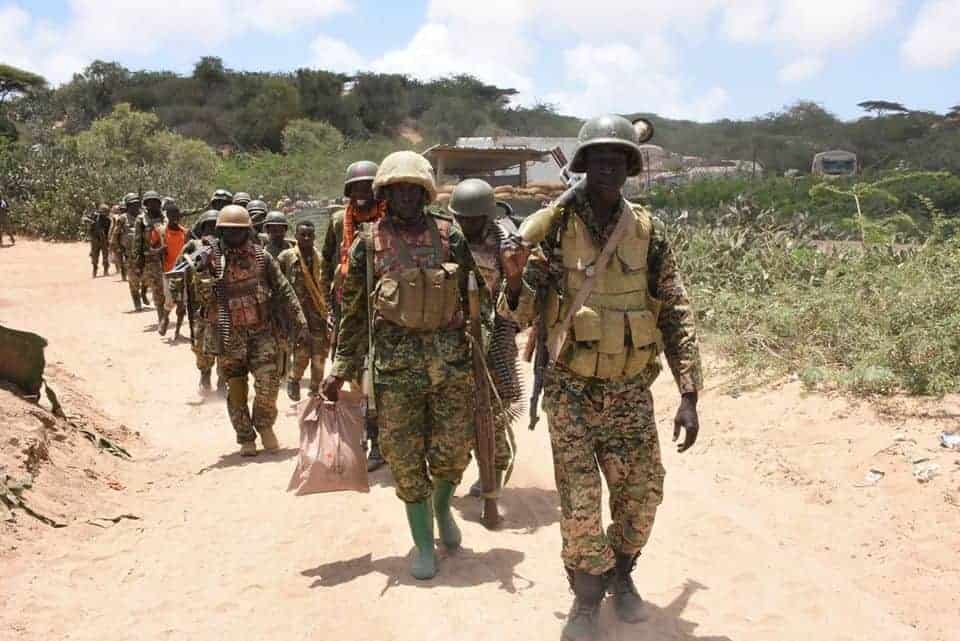
Mogadishu, Somalia (Banaadir24) – The Somali federal government has formally asked the African Union to postpone its scheduled peacekeeper drawdown by three months, warning that a premature exit could create a security vacuum and undo recent territorial gains against Al-Shabaab militants.
In a letter addressed to the African Union Commission and key donor partners, Somalia requested that the withdrawal of an additional 4,000 troops—initially scheduled for the end of June—be delayed until September. The request comes just days after insurgents captured Hawadley, a strategic village northeast of Mogadishu, following the withdrawal of Burundian troops from the area.
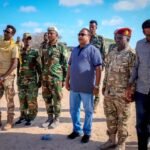
> “The Somali National Army needs more time to prepare, coordinate and sustain operations in newly liberated zones,” said an official in the Ministry of Defense, speaking on condition of anonymity due to the sensitivity of the matter.
*Al-Shabaab Exploits Withdrawal Gaps*
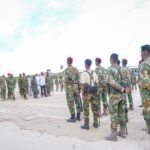
The capture of Hawadley has fueled criticism that the African Union’s phased drawdown under its Support and Stabilization Mission in Somalia (AUSSOM) may be moving faster than Somali forces can handle. AUSSOM replaced the African Union Transition Mission in Somalia (ATMIS) earlier this year, and currently fields around 11,900 troops, with the aim of fully handing over security responsibilities to Somali forces by the end of 2026.
But analysts say that timeline is increasingly at risk.
> “The militants are not waiting for political deadlines,” said Fatima Noor, a Mogadishu-based security researcher. “They’re exploiting every inch of territory vacated by AU forces.”
*A Fragile Transition*
The African Union has not yet issued a formal response to the request, but diplomatic sources in Addis Ababa and Nairobi told reporters that discussions are underway among the AU Peace and Security Council and major donor states, including the United Kingdom, United States, and European Union.
Somalia’s federal leadership insists that the request is not a backpedaling of its commitment to self-reliance, but a necessary adjustment to “preserve stability and avoid strategic reversals.”
Meanwhile, Somali forces—backed by international training missions—have launched renewed offensives in Middle Shabelle and Hiraan, killing over 50 militants in recent days, according to a military spokesperson. However, experts warn that rural holdouts and mobility still give Al-Shabaab an operational edge.
*Balancing Pressure and Patience*
International pressure has been mounting for the AU to stick to its withdrawal calendar, citing cost concerns and the need for Somalia to assume full ownership of its security architecture. Yet recent battlefield developments complicate that calculus.
A U.N. official familiar with the security situation said the “risk of reversal” remains high if forces transition faster than administrative and logistical systems can support.
For Somalia, the request represents a critical test: whether security gains can be consolidated through cooperation—or crumble under political and militant pressure.
©️ Banaadir24, all rights reserved